
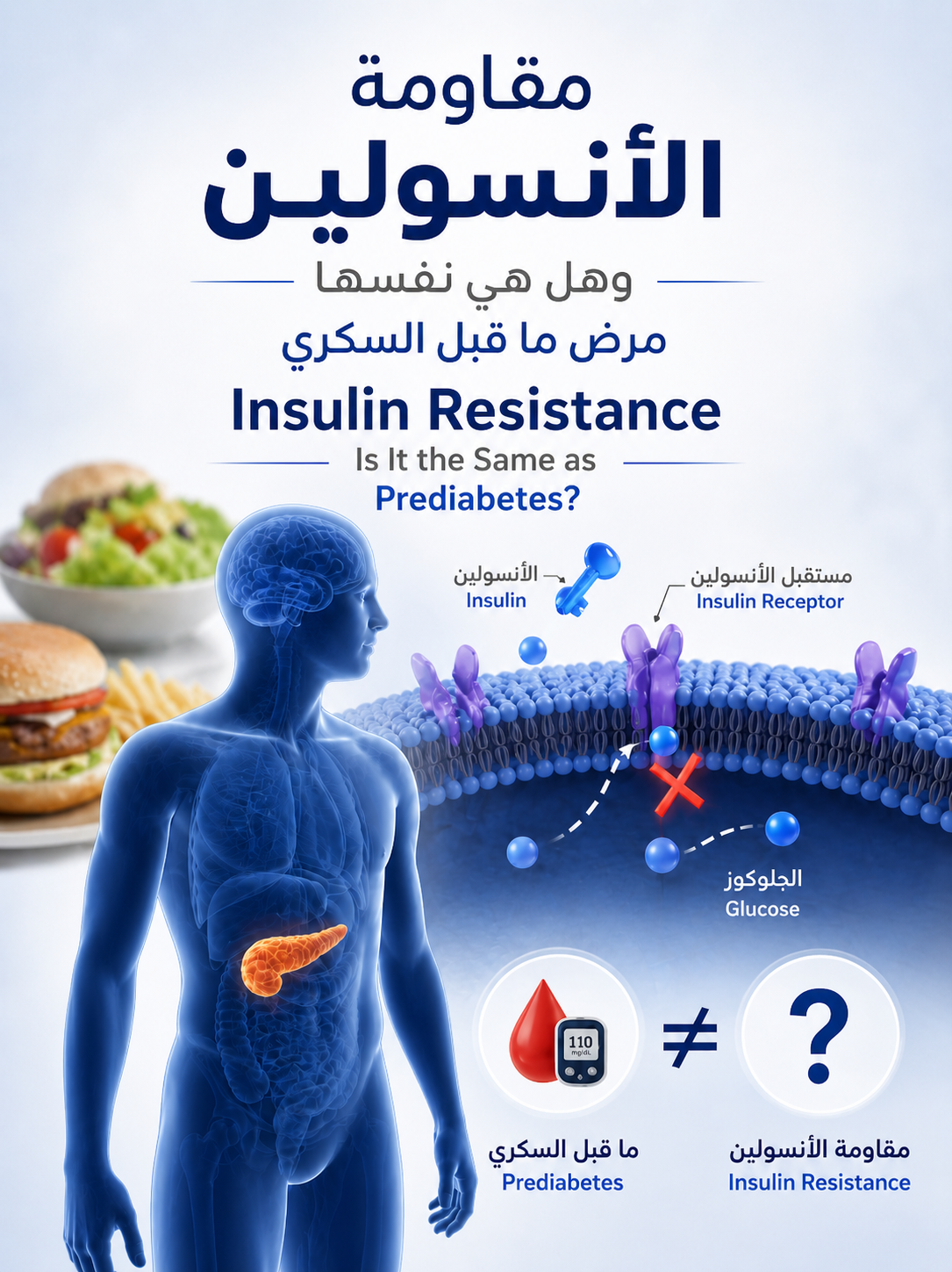
Insulin resistance: is it the same as prediabetes?
Prediabetes is a diagnostic condition that occurs when blood glucose levels are higher than normal but not high enough to be classified as full diabetes. People with prediabetes often have insulin resistance, but the two are not exactly the same.
What is the difference?
- Insulin resistance = an early defect in the body’s response to insulin (a warning sign).
- Prediabetes = elevated blood sugar levels above normal, but not high enough for a diagnosis of diabetes.
Causes of Insulin Resistance:
Several factors may contribute, including:
- Overweight or obesity (especially visceral fat)
- Physical inactivity
- A diet high in sugars and refined carbohydrates
- Family history of diabetes
Insulin resistance often develops before clear symptoms of prediabetes or diabetes appear.
Can genetics play a role?
Yes—genetics can increase the likelihood of developing insulin resistance, particularly in individuals with a family history of diabetes.
How can it be prevented or managed?
- Improving diet
- Regular walking and exercise
- Maintaining a healthy weight
- Reducing sugar and processed foods
- Monitoring HbA1c every 3 months to assess progression
These steps can help prevent insulin resistance from progressing to prediabetes or type 2 diabetes.
Summary:
Insulin resistance is an early warning condition indicating impaired insulin function, while prediabetes is a diagnosis based on elevated blood glucose levels. Both are closely related and increase the risk of developing diabetes if not managed early.
 26 Apr 2026