
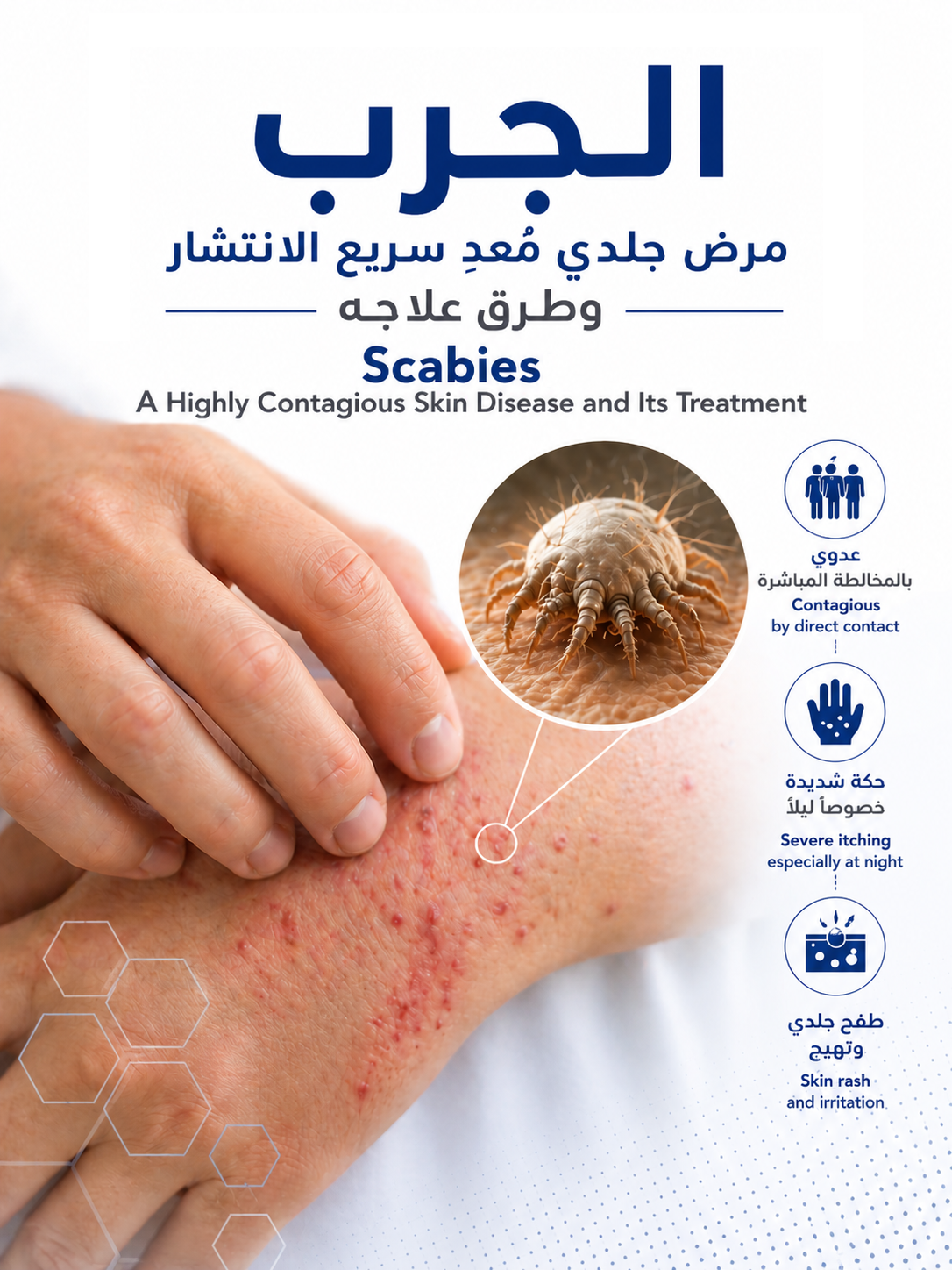
Scabies: A highly contagious skin disease with rapid spread and its treatment methods
When a mother hears from you that the diagnosis is consistent with scabies, she may react strongly and reject it, especially if she has obsessive concerns about cleanliness. However, it is important not to imply that she is being “unclean.”
In the past year, pediatric clinics have reported an increase in suspected scabies cases, although many of them are not typical presentations. In most cases, due to limited clinical experience, treatment was sometimes given in a non-standard or random manner. The current rise in cases likely requires a social investigation rather than only a medical one.
Scabies is not related to personal hygiene. It is a parasitic infestation that can affect all social groups regardless of their level of cleanliness. It is not a sign of poor hygiene: scabies is not caused by infrequent bathing, and even very clean individuals can become infected through close contact with an infected person.
It spreads rapidly in crowded environments such as schools, prisons, and care homes due to direct skin-to-skin contact, not because of poor personal hygiene. Transmission occurs through prolonged direct contact (e.g., hand-holding, hugging, or sharing a bed).
Common affected areas include the spaces between fingers, wrists, elbows, armpits, waist, and the genital or breast areas.
Conclusion: Having scabies does not mean a person is unclean; it simply means they have been exposed to the scabies mite from an infected individual.
Scabies Treatment:
- Topical creams: Such as permethrin cream, applied over the entire body from the neck down and washed off after 8–14 hours.
- Oral medication: Ivermectin tablets, which are highly effective, especially in severe or crusted (Norwegian) scabies.
- Symptomatic treatment: Antihistamines to relieve itching, and antibiotics if a secondary bacterial infection develops due to scratching.
Prevention and Management:
- Wash clothes, towels, and bed linens used within the previous 3 days in hot water above 50°C and dry them with heat.
- Seal non-washable items in plastic bags for at least 3 days, as mites die outside the human body.
- Clean furniture and carpets using a vacuum cleaner.
- Avoid direct physical contact with infected individuals until treatment is completed.
Increasing bathing alone does not kill the mites, and they are not removed by soap or water.
 26 Apr 2026